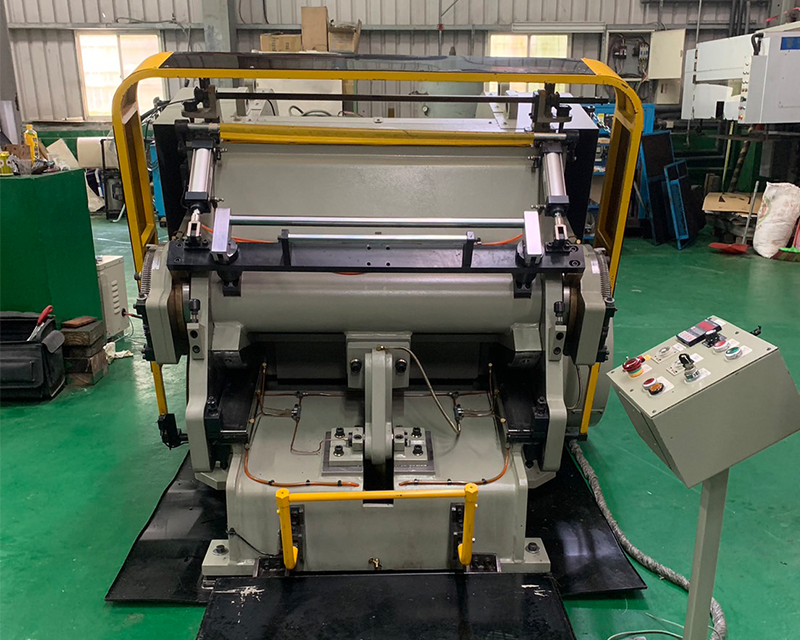
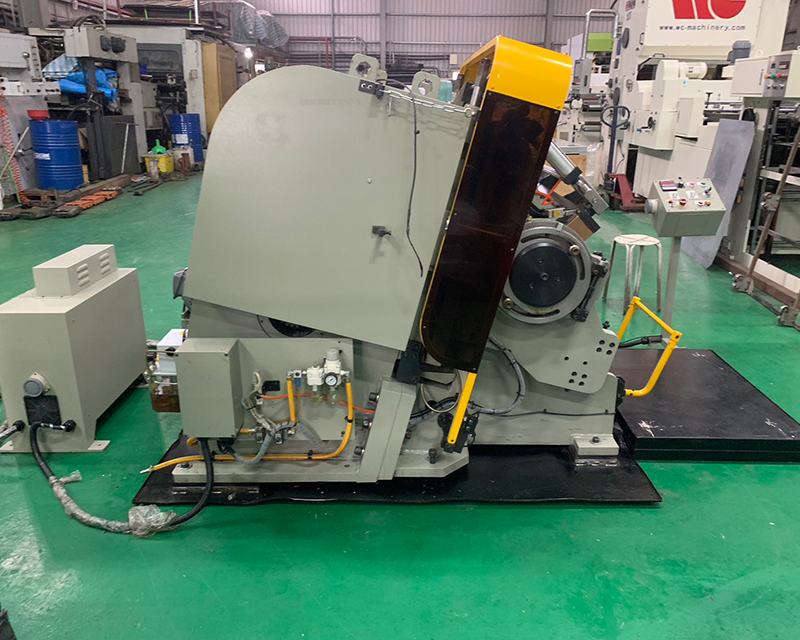
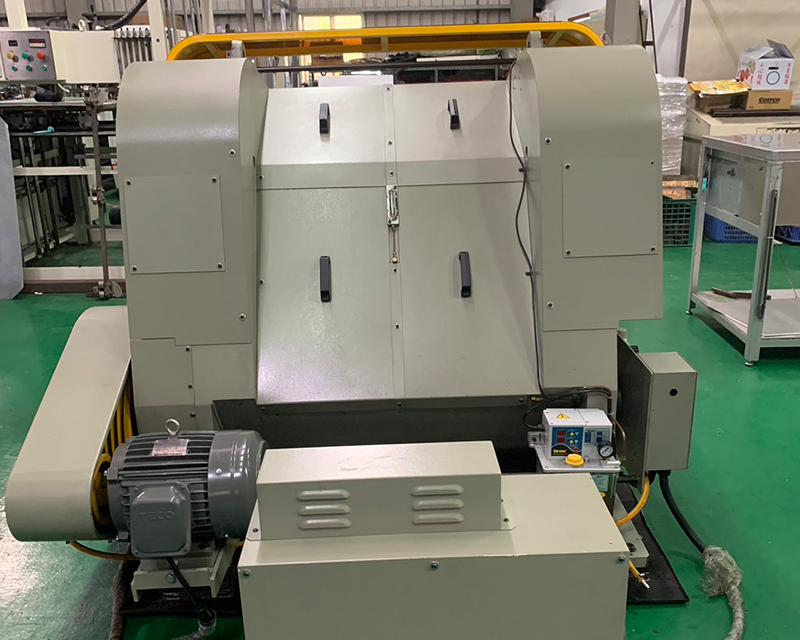
Machine Dimensions: 260 cm (L) × 185 cm (W) × 145 cm (H)
Machine Weight: 6,800 kg
Power Supply: 380 V / 5.6kw
Max speed:20 r/min
Die-cut paper cardboard thickness:0.1-15mm
Features:
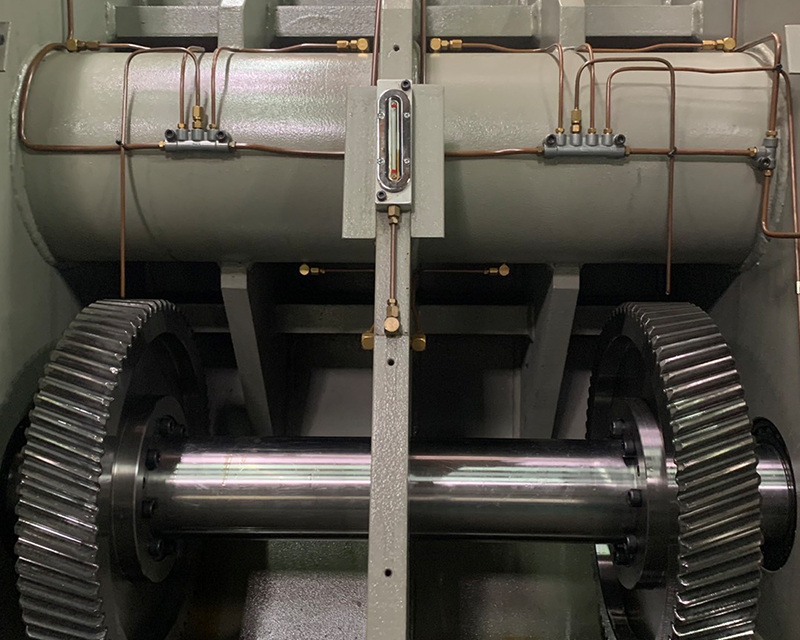
Super die-cutting pressure, three-axis full-tooth transmission system, effectively transmits power, and outputs a maximum die-cutting pressure of 120 tons.
The steel body is super resistant to heavy pressure and has less deformation during cutting, so the time for reprinting can be greatly shortened.
To increase production, the movable press frame (chin) table is only 89 centimeters (less than three points) from the ground, which conforms to ergonomic principles and does not require a scratching board to operate the machine.
The machinery is maintenance-free, and the entire machine is automatically lubricated and recycles oil, making it easy to keep the factory clean.
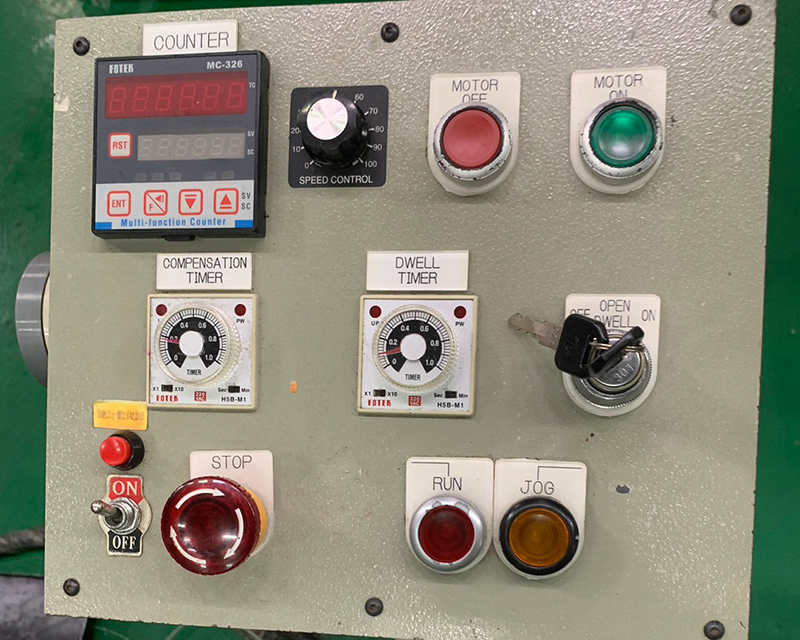
Using the pneumatic clutch, the start and stop actions are fast and reliable. No matter experienced or novice, simple or complex work can be easily operated.
Long durability and good flatness. The R rail of this machine adopts 3D three-dimensional processing with high precision. It is matched with the hardened and precision ground R block. When pressing and cutting, it will not be heavy up or down or light up or down, and will not wear out. Less, not only the machine is flatter but also has a longer life.
The large core adopts a large shaft diameter of 120mm and is designed with an R angle, which is not easy to break
A die-cutting machine is a key piece of equipment used in the post-printing processing of paper packaging. Its core function is to precisely cut, creasing, and shape cardboard by applying pressure.
Specific functions include:Die-cutting (cutting and shaping): Using a steel knife or template as a tool, the contours of cardboard (such as cardboard, corrugated cardboard) are cut to form the desired shape, such as cardboard boxes, labels, greeting cards, and other packaging products.Creasing (screwing): Creases are pressed into the cardboard, allowing it to fold and shape according to predetermined positions. This is an indispensable step in the production of packaging containers such as cardboard boxes.
The workflow is as follows:Structural Basics: The die-cutting plate (a template with engraved cutter lines) is fixed on a horizontal or vertical flat plate, while the cardboard to be processed is placed on the pressure plate (also called the lower pressure plate). In vertical models, the plate is vertically set, and the pressure plate moves up and down; in horizontal models, both the plate and the pressure plate are horizontal, and the pressure plate moves from bottom to top.Pressing Process: The equipment drives the pressure plate to reciprocate via a crankshaft connecting rod, cam divider, or hydraulic system. When the pressure plate descends, it applies uniform pressure to press the cardboard against the die-cutting plate, allowing the steel cutter to fully cut into the cardboard, completing the die-cutting process; if steel wire is used, it will press creases into the cardboard, forming indentations.